


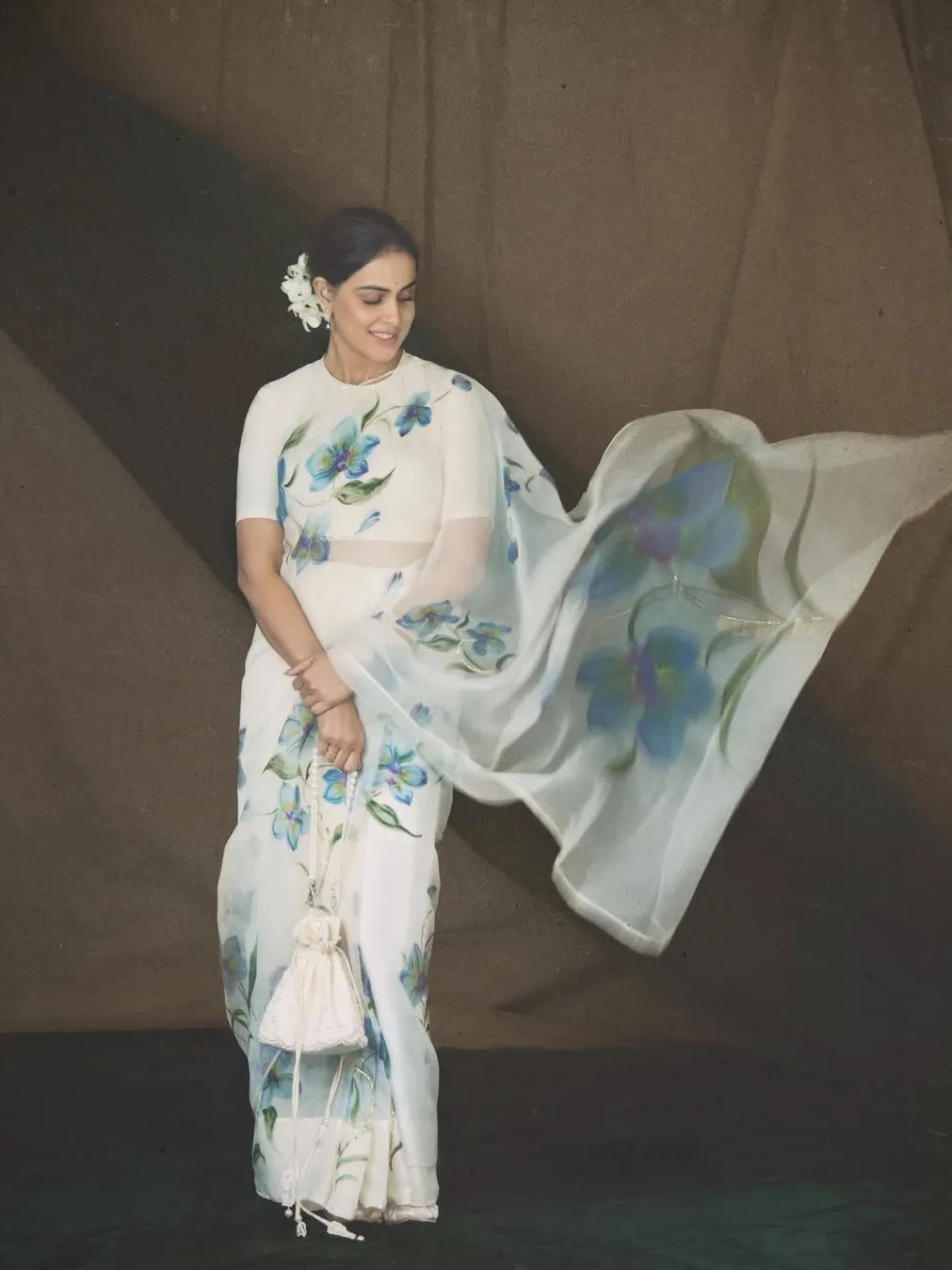
In a fashion landscape increasingly defined by fast trends and fleeting moments, Genelia Deshmukh’s Picchika sari emerges as a poetic pause—one that celebrates craftsmanship, sustainability, and timeless elegance. Draped in an ivory sari adorned with meticulously hand-painted orchids, the actor and entrepreneur effortlessly bridges tradition and modernity. This look is not merely about style; it reflects a deeper fashion toward conscious dressing, artisanal revival, and storytelling through textiles.
Genelia has long been admired for her understated fashion sensibility, and this appearance reinforces her ability to choose ensembles that resonate beyond surface aesthetics. At a time when Indian fashion is rediscovering its roots, her Picchika sari becomes a visual metaphor for the slow fashion movement—where patience, skill, and heritage take center stage.
Understanding the Art of Picchika: A Heritage Reimagined
Picchika painting, traditionally practiced in parts of Karnataka, is an intricate textile art that uses natural dyes and hand-painted motifs inspired by flora, mythology, and temple murals. Unlike printed fabrics, each Picchika sari is a one-of-a-kind creation, requiring hours—sometimes days—of careful brushwork.
Genelia’s sari showcases this heritage beautifully. The orchids, painted delicately across the ivory base, appear almost lifelike, echoing nature’s quiet elegance. The choice of orchids is symbolic too—representing refinement, resilience, and femininity. In contemporary fashion discourse, such details elevate the garment from attire to art.
As Indian fashion trends lean toward authenticity, Picchika saris are increasingly being embraced by designers, celebrities, and conscious consumers alike.
The Power of Ivory: Minimalism Meets Luxury
The ivory base of the sari plays a crucial role in amplifying its visual appeal. Neutral palettes are currently dominating fashion drift forecasts, particularly within luxury ethnic wear. Ivory, unlike stark white, offers warmth and versatility, making it ideal for both day events and evening soirées.
Against this soft backdrop, the painted orchids stand out with graceful contrast—neither overpowering nor understated. This balance makes the sari adaptable, allowing it to be styled traditionally or with modern accents.
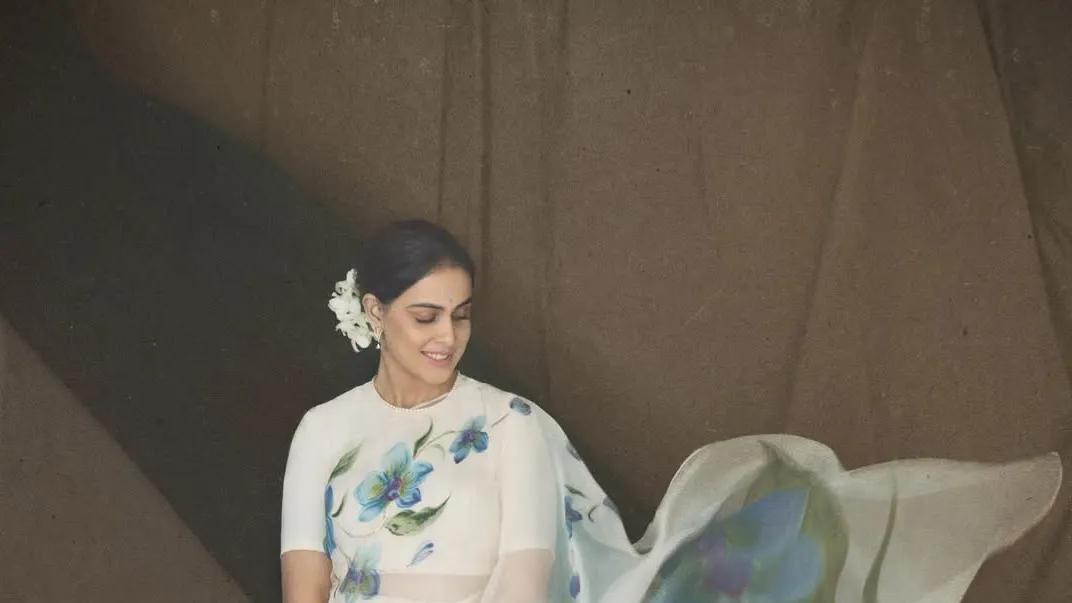
In the evolving world of Indian fashion, such restrained elegance signals a move away from excessive embellishment toward refined minimalism—where craftsmanship becomes the true ornament.
Floral Sarees and the Rise of Nature-Inspired Fashion
Floral motifs have always held a cherished place in Indian textiles, but their current resurgence is deeply tied to the global shift toward nature-inspired fashion. From hand-embroidered blooms to painted botanicals, designers are revisiting florals through sustainable lenses.
Genelia’s orchid-painted sari aligns seamlessly with this trend. Unlike mass-produced floral prints, the hand-painted orchids reflect individuality and intentional design. This approach resonates strongly with today’s fashion-conscious audience—particularly those seeking exclusivity and meaning in their wardrobe choices.
Sustainable Fashion as a Style Statement
One of the most compelling aspects of this look is its sustainability narrative. Picchika saris often use organic fabrics, natural dyes, and low-impact processes—making them a cornerstone of eco-friendly fashion in India.
Genelia Deshmukh, known for her thoughtful lifestyle choices, subtly reinforces that sustainability can be aspirational. Her sari demonstrates that ethical fashion doesn’t compromise on luxury or elegance. Instead, it redefines it.
In the current fashion climate, sustainability is no longer a niche concept—it’s a powerful style statement. And when celebrities champion such causes through fashion, it accelerates awareness and adoption across audiences.
Styling Details: Letting the Sari Speak
True to her signature aesthetic, Genelia keeps the styling minimal. A hand-painted sari like this requires restraint, allowing the artwork to shine. Soft makeup, natural hair, and understated jewellery complement the look without distracting from the sari’s intricate detailing.
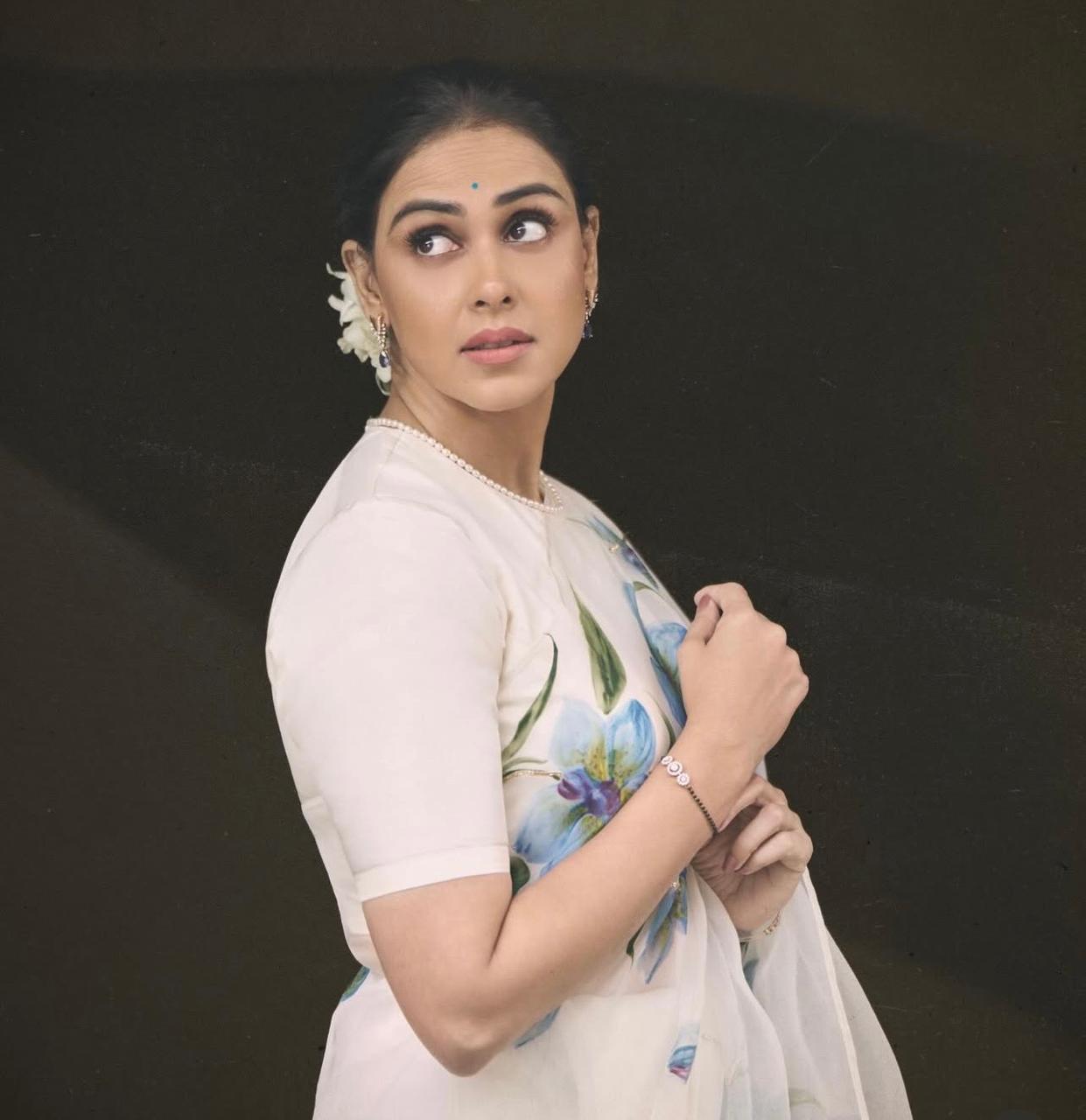
This approach aligns with modern celebrity fashion trends, where simplicity enhances authenticity. It also provides style inspiration for readers—showing how hand-crafted sarees can be worn effortlessly for intimate gatherings, cultural events, or festive occasions.
From a fashion editorial perspective, such styling reinforces the sari’s versatility, making it relevant to a broader audience.
Celebrity Influence on Indian Fashion Trends
Celebrity fashion plays a pivotal role in shaping consumer preferences, and Genelia Deshmukh’s style choices often strike a chord with audiences seeking wearable elegance. Unlike overly dramatic red-carpet looks, her wardrobe leans toward relatable luxury—making trends more accessible.
By choosing a Picchika sari, she contributes to the revival of regional textile arts, encouraging designers and consumers to look beyond mainstream silhouettes. This influence fuels the growing demand for handcrafted sarees, boutique labels, and slow fashion brands across India.
For fashion websites, content around celebrity-driven sustainable fashion consistently attracts high engagement, making this blog strategically valuable for organic traffic growth.
Why This Look Resonates in Today’s Fashion
The fashion of 2025 points clearly toward longevity, purpose, and personalization. Genelia’s orchid-painted Picchika sari embodies all three. It’s timeless rather than trend-bound, meaningful rather than ornamental, and unique rather than mass-produced.
Such looks resonate deeply with audiences who are redefining luxury—not as excess, but as intentional choice. In this context, the sari becomes more than a garment; it becomes a reflection of values, identity, and cultural pride.
Final Thoughts: When Fashion Becomes a Story
Genelia Deshmukh’s Picchika sari is a gentle reminder that fashion’s true power lies in storytelling. Through painted orchids on an ivory canvas, it narrates a tale of heritage, sustainability, and modern elegance. It stands at the intersection of art and attire, tradition and contemporary fashion.
As Indian fashion continues to evolve, looks like these set the tone for a more mindful, artistic future—where what we wear reflects not just style, but substance.
For fashion enthusiasts, designers, and conscious consumers alike, this sari isn’t just an outfit to admire—it’s an inspiration to embrace fashion with purpose.