


For over two dazzling decades, Aishwarya Rai Bachchan has reigned as the undisputed queen of the Cannes Film Festival. When the red carpet rolls out in the south of France every May, fashion enthusiasts across the globe await one name with bated breath—Aishwarya. Her presence at Cannes is not just a walk down the red carpet; it’s a statement, a legacy, and a cultural celebration. As the Indian representative who put Bollywood on the international style map, Aishwarya Rai’s Cannes appearances have become a masterclass in glamour, tradition, and experimentation.
Whether draped in regal Indian attire or flowing through the Palais des Festivals in avant-garde couture, her fashion journey at Cannes is nothing short of cinematic. Let’s take a deep dive into the evolution of Aishwarya Rai Bachchan’s most iconic Cannes looks and uncover how she used fashion to weave a story of elegance, power, and timeless beauty.
The Beginning of a Timeless Affair: 2002
In 2002, Aishwarya Rai made her debut at Cannes as a member of the jury. She was already a celebrated actress in India and globally known for her beauty after winning the Miss World crown in 1994. But Cannes was a new arena—and she entered it like a queen. Her debut look was unforgettable: a heavily embellished gold and green Neeta Lulla sari, paired with traditional Indian jewelry. While some critics debated her traditional choice, it was clear Aishwarya wasn’t trying to fit in—she was setting a new precedent.
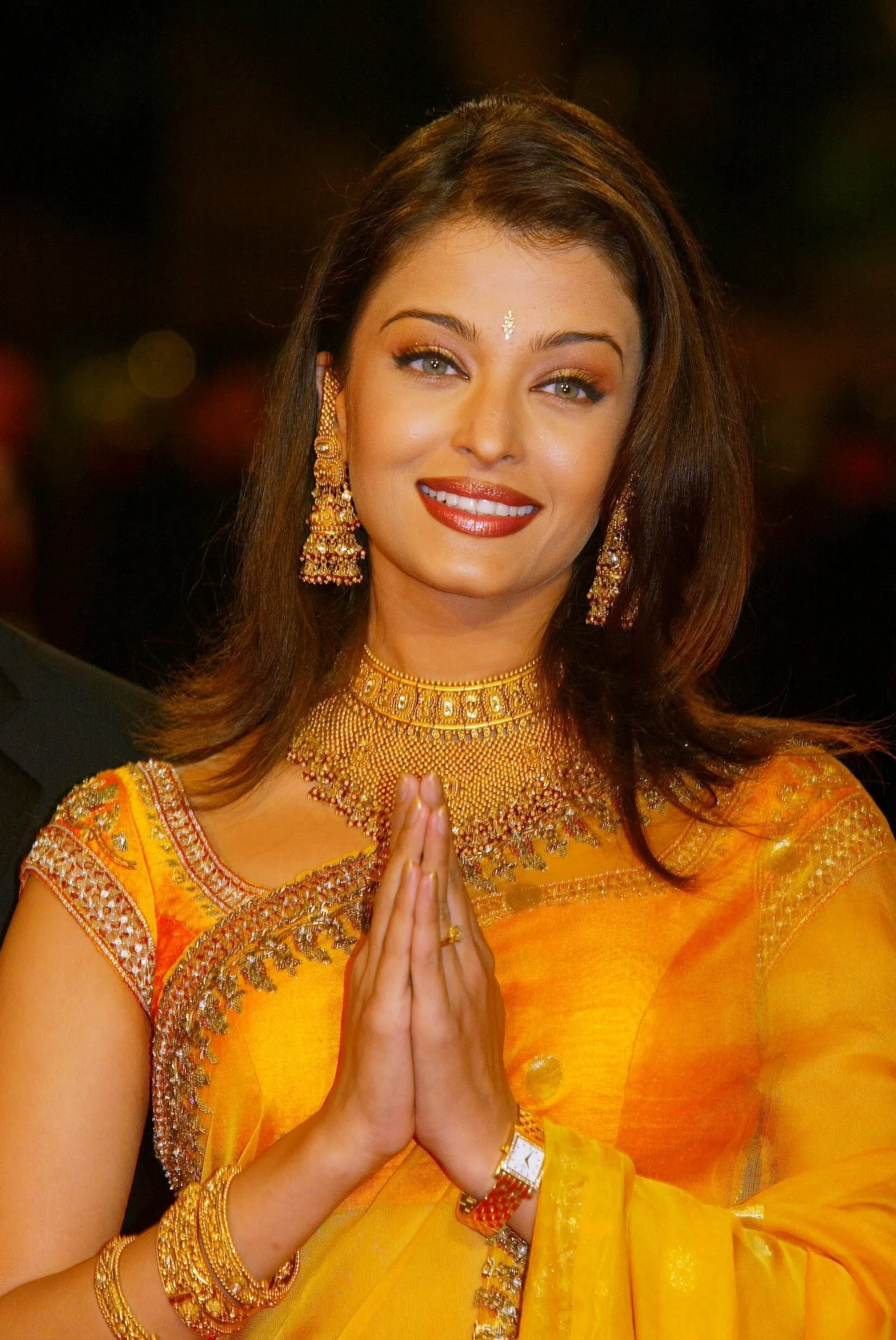 Bold, unapologetically Indian, and deeply cultural, her look in 2002 made one thing evident: Aishwarya was not there to simply blend into the crowd of global stars. She came to make a statement for India, and she did so with poise.
2003: The Bold Corset and Skirt Misstep
Let’s face it—not every iconic fashion story is perfect. Aishwarya’s 2003 Cannes look, a gold corset top paired with a crinkled skirt, received harsh criticism. The makeup and styling were not on par with her usual grace. Yet, this moment remains crucial because it marked a turning point in her Cannes journey.
Sometimes it takes a stumble to find your stride, and Aishwarya’s 2003 ensemble taught her—and us—that the world stage demands nothing short of perfection. From this moment, she began to evolve with purpose and precision.
2005: The Elegance Returns
After skipping Cannes in 2005, Aishwarya Rai returned in 2005, showcasing a completely different side. This time she wore a strapless black gown with delicate detailing, bringing back her innate grace. Her hair was styled in loose curls, and she let her natural charm do the talking.
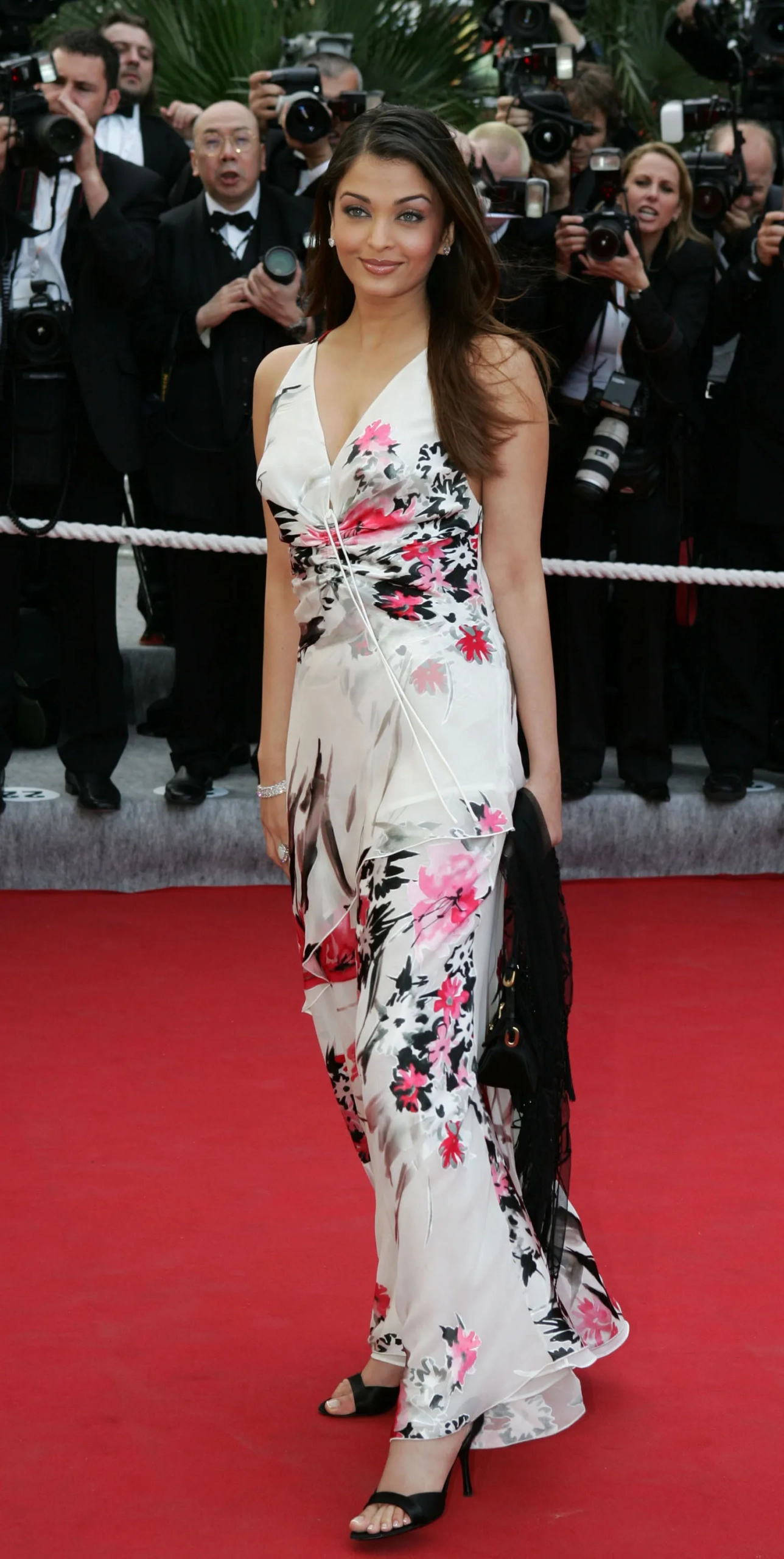 This year was pivotal because it signaled a refined version of Aishwarya, one who had learned from past criticisms and returned stronger. She now had a firm grasp on balancing her cultural roots with international trends.
2006: Aishwarya Meets Elie Saab
Enter Elie Saab, the designer who would later become a staple in her Cannes wardrobe. In 2006, she wore a silver strapless gown by the Lebanese designer, marking the beginning of a love affair with high-end couture. The dress was flowy and ethereal, and her look was completed with minimal accessories and nude makeup.
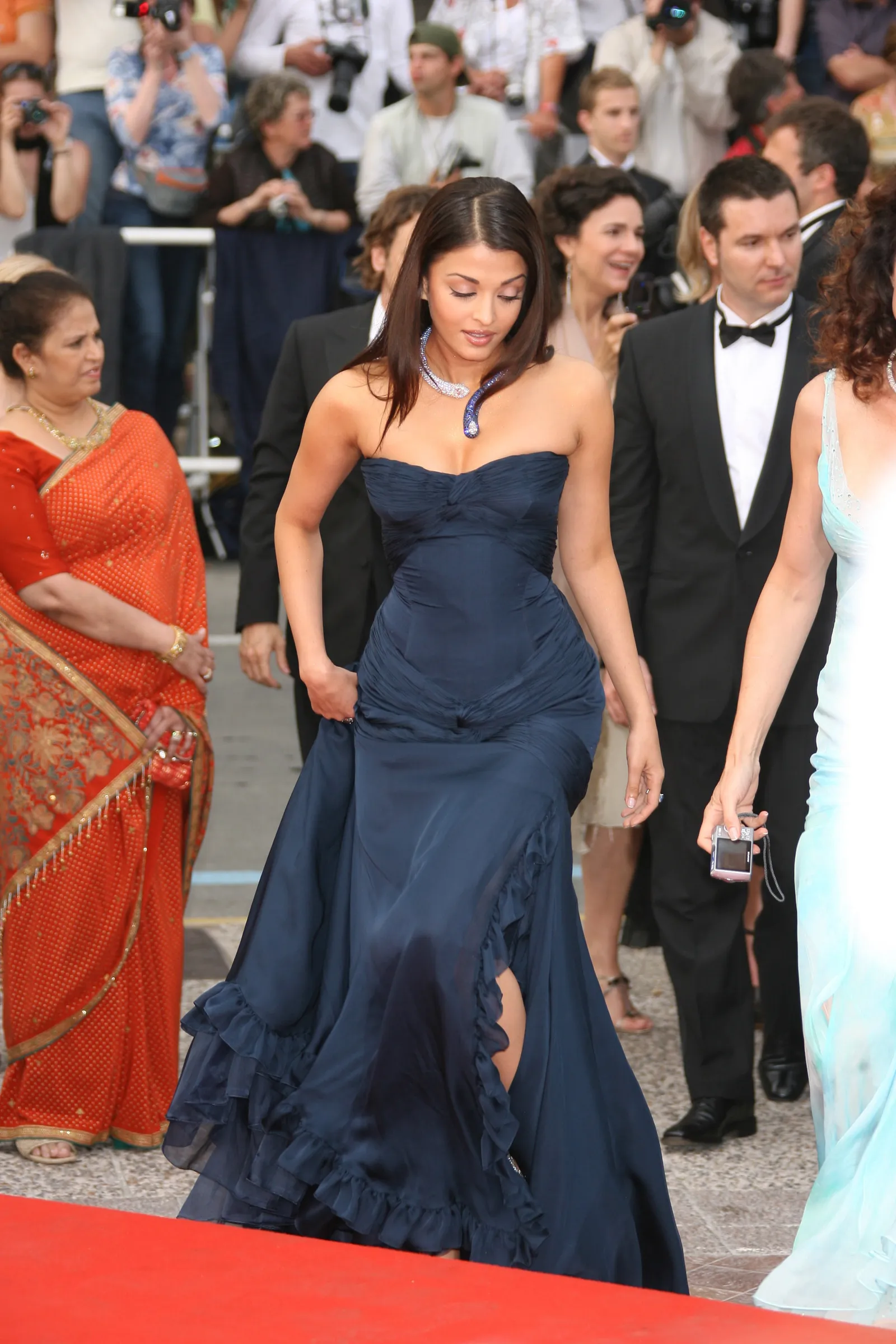 This year made one thing clear: Aishwarya had found her rhythm on the global red carpet, and she was only getting started. She embraced the concept of red carpet storytelling, pairing emotional grace with sartorial elegance.
2009: The Mermaid Moment
Skip ahead to 2009, and Aishwarya stunned the world in a Roberto Cavalli strapless white gown that hugged her curves and flowed like ocean waves. The mermaid silhouette not only accentuated her figure but also elevated her from a mere celebrity to a red carpet goddess.
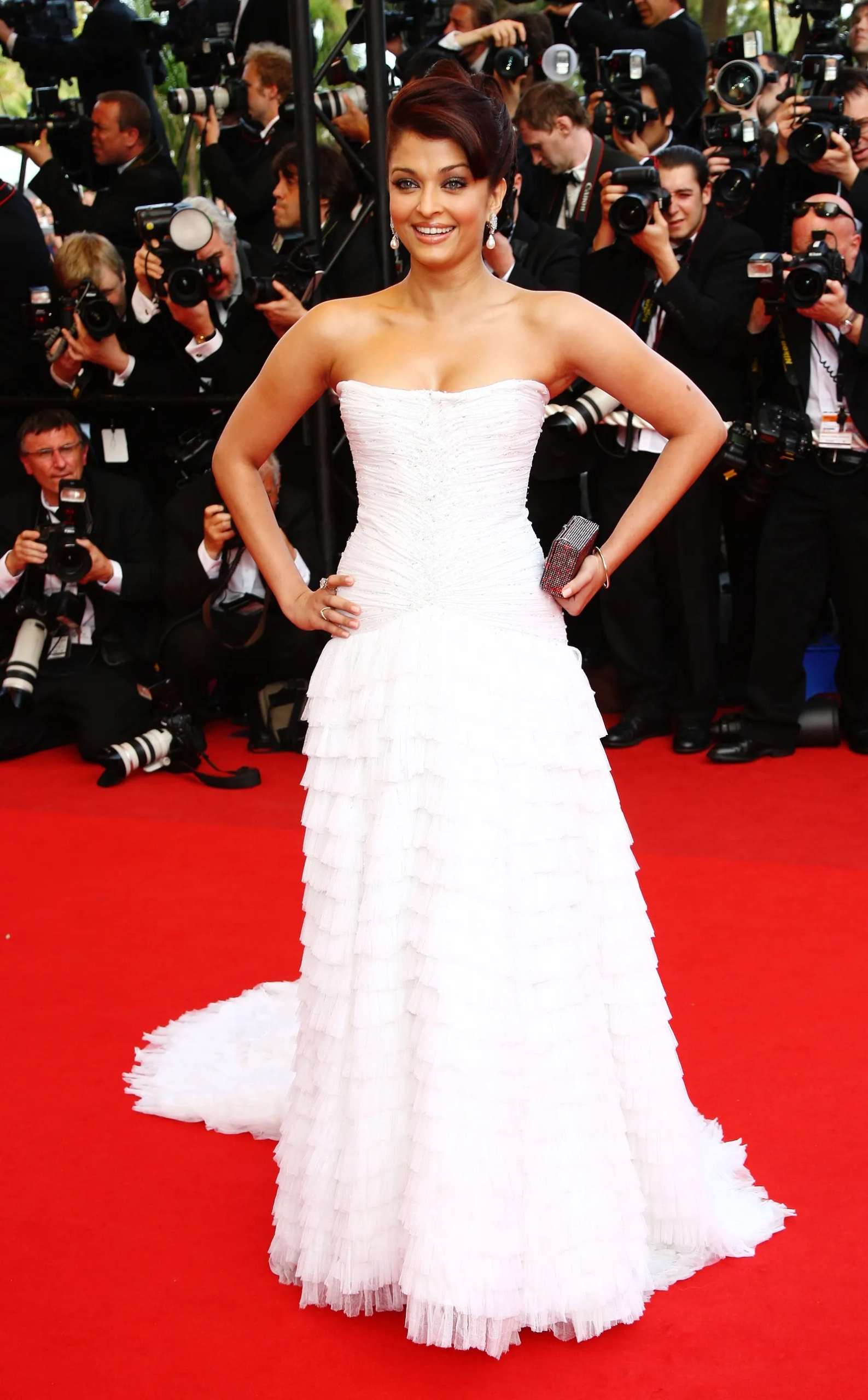 Her makeup was bronzed and her waves were beachy, making her look like a sun-kissed goddess of the sea. This gown received rave reviews and became one of her most talked-about appearances at Cannes.
2010: Vintage Vibes and Retro Glam
In 2010, Aishwarya experimented with a lavender Elie Saab gown that featured sheer sleeves and floral embroidery. The look was romantic and vintage-inspired, reminiscent of old Hollywood glamour. Her hair was pulled back in a bun, and her makeup leaned towards plum tones, enhancing the entire aesthetic.
This year stood out because Aishwarya began embracing themes—her outfits weren’t just clothing anymore, they were moods, narratives, and emotions. And the audience started to pick up on it.
2014: Old Hollywood Meets Desi Diva
One of the most memorable years for Aishwarya at Cannes was 2014, where she walked the red carpet in a golden Roberto Cavalli gown that hugged her body and flared at the hem. It was pure Hollywood glam with a touch of Indian royalty. Her soft waves, red lips, and strong presence made this look go viral instantly.
By now, Aishwarya Rai had become a Cannes veteran, and her looks were anticipated, discussed, and revered. Media outlets praised her consistency, fans idolized her style choices, and fashion critics finally acknowledged her as a global icon.
2017: The Cinderella Gown
Ah, 2017—the year she wore that blue Michael Cinco ball gown that broke the internet. She looked like she had walked out of a fairytale, with the voluminous gown cascading around her like clouds. The off-shoulder gown with a structured bodice and dramatic train was what dreams are made of.
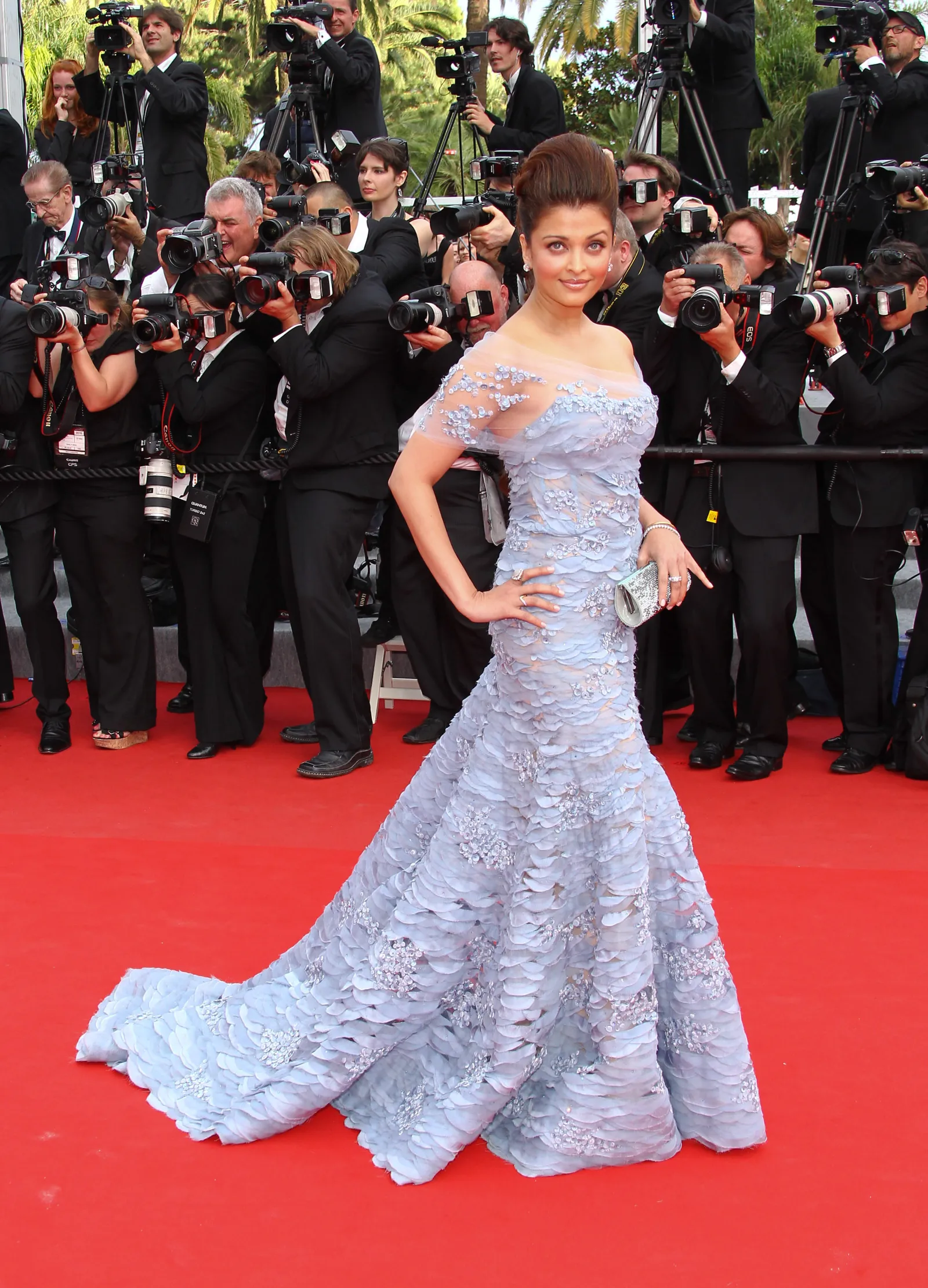 This was more than just a fashion moment—it was a cultural moment. The image of Aishwarya walking down the Cannes red carpet in that gown became symbolic of elegance, fantasy, and femininity.
Her hair was pinned back, letting the dress do all the talking. The look received global acclaim and was featured in virtually every top fashion publication.
2018: Fierce in Butterfly Gown
If 2017 was about ethereal beauty, 2018 was about fierce drama. Aishwarya stunned again in a butterfly-inspired Michael Cinco gown, a figure-hugging, jewel-toned creation with extensive beading and a dramatic train. It took over 3,000 hours to make this dress—and every second was worth it.
This look showed the evolution of Aishwarya from a delicate muse to a commanding queen. Her makeup was bolder, her expressions stronger, and her confidence—unshakable.
2019: The Golden Mermaid
In 2019, Aishwarya wore a metallic gold gown by Jean-Louis Sabaji, designed like molten gold sculpted into a mermaid silhouette. Her dramatic winged eyeliner and slicked-back hair added an edge to the dazzling look.
This gown proved her commitment to experimenting even after two decades at Cannes. She didn’t rest on past glory—she kept redefining her style to reflect modernity while still holding on to that timeless Aishwarya charm.
2022: The Black Gown with Flower Sleeves
Returning post-pandemic, Aishwarya walked the 2022 Cannes red carpet in a custom Dolce & Gabbana gown, which was black with oversized pink floral detailing on the sleeves. It was dramatic, artistic, and slightly polarizing—but unforgettable.
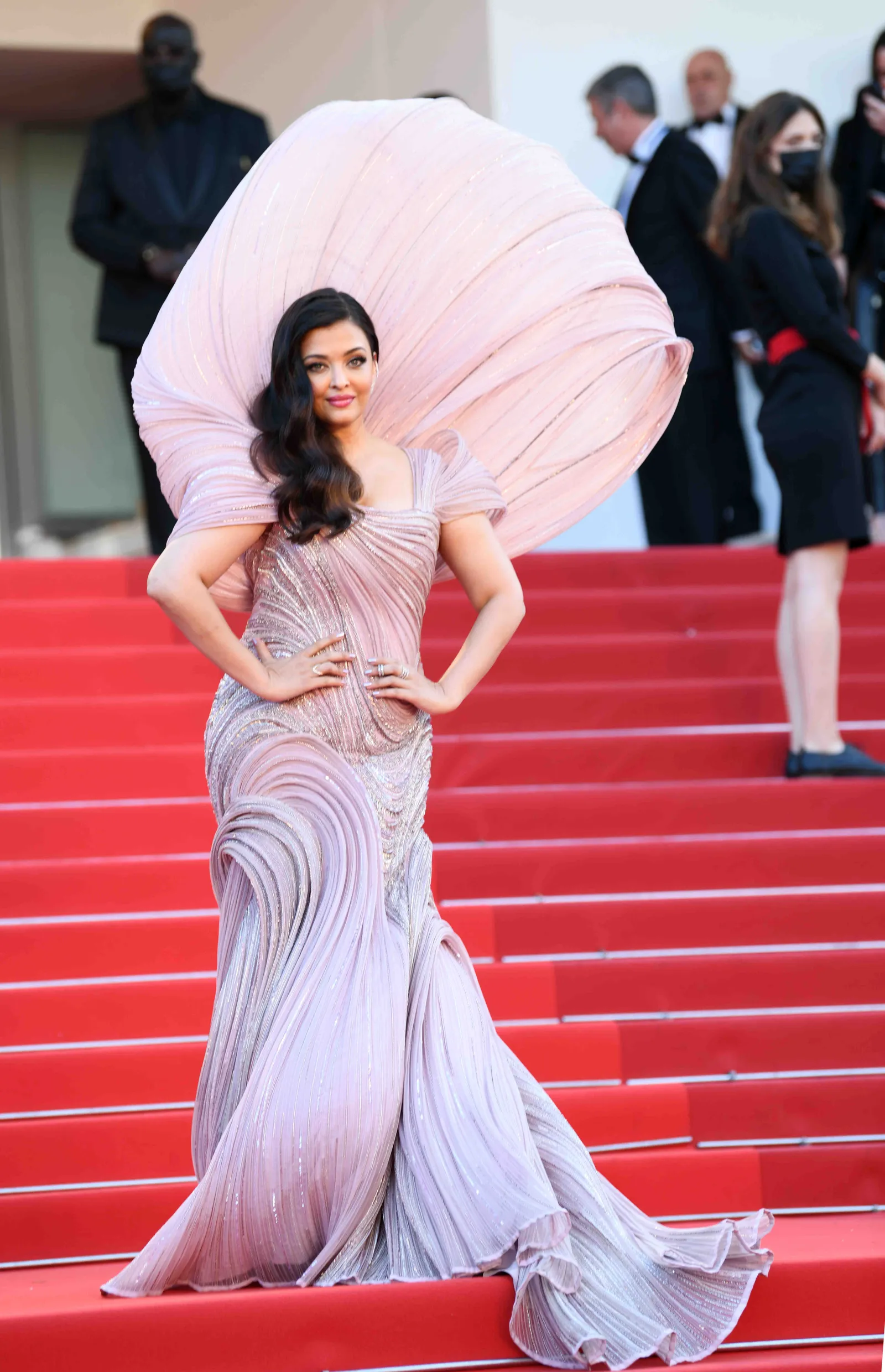 She paired it with her signature minimal makeup and long flowing hair. It was a nod to high fashion drama and proof that she’s not afraid to push boundaries, even after dominating the red carpet for 20 years.
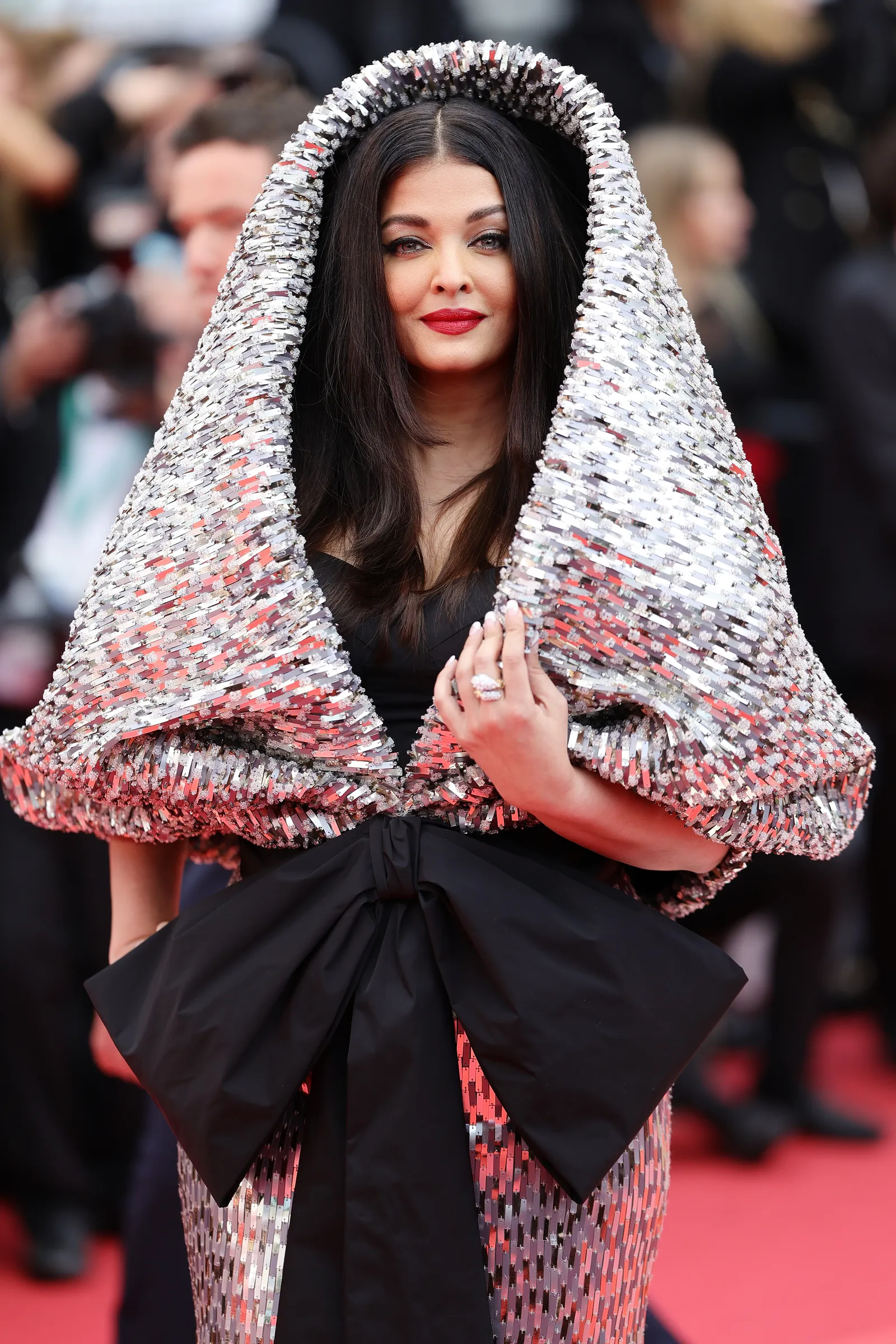
2023: Silver Sophistication
In 2023, Aishwarya returned with a glamorous silver gown featuring a dramatic hood, again by Sophie Couture. This futuristic look garnered mixed reactions, but it was impossible to ignore. She had once again managed to grab headlines and ignite fashion debates.
At this point in her journey, Aishwarya Rai Bachchan was no longer just a guest at Cannes—she had become a pillar of its red carpet history.
Cultural Influence and Global Impact
Over the last two decades, Aishwarya has used her Cannes appearances to champion Indian designers, challenge Western beauty standards, and promote global couture. She brought Indian aesthetics to an international platform long before diversity became a trend.
She wore saris, lehengas, Anarkalis, and sherwanis. She donned bold gowns, delicate chiffons, heavy velvets, and experimental silhouettes. Each look was meticulously curated, not just for style but for cultural storytelling.
Fashion is transient, but style is eternal—and Aishwarya’s Cannes looks are a testament to this idea.
The Symbolism Behind Her Choices
Each look Aishwarya Rai has chosen over the years isn’t just about glamour. There’s always a deeper layer of meaning. Whether it’s embracing tradition, representing India, or celebrating womanhood, her outfits tell a story.
Take the 2002 sari—a nod to her roots. The 2017 Cinderella gown—a symbol of fantasy and hope. The 2018 butterfly gown—an embodiment of transformation and strength. These weren’t just fashion moments; they were narratives dressed in couture.
Why Aishwarya’s Cannes Journey Matters
In a world where celebrities often follow trends, Aishwarya Rai has carved her own path. She’s taken risks, endured criticism, and emerged stronger each time. Her Cannes journey reflects her evolution—not just as a fashion icon, but as a woman.
It’s a timeline of grace, growth, and global influence, and one that continues to inspire designers, stylists, and dreamers alike.
Conclusion: More Than Just Looks—A Legacy
Two decades, countless red carpets, and millions of admirers later, Aishwarya Rai Bachchan’s Cannes fashion legacy stands unparalleled. Her journey from the traditional sari to dramatic couture gowns mirrors the journey of Indian fashion on the global stage—bold, beautiful, and unapologetically unique.
Each year, as the French Riviera awaits its global stars, one thing remains certain: Aishwarya Rai will arrive—not just in style, but in power. Her Cannes appearances are more than just moments; they are milestones in the history of fashion. And with each new year, we continue to celebrate not just what she wears, but who she is—a timeless icon of elegance, influence, and inspiration.