


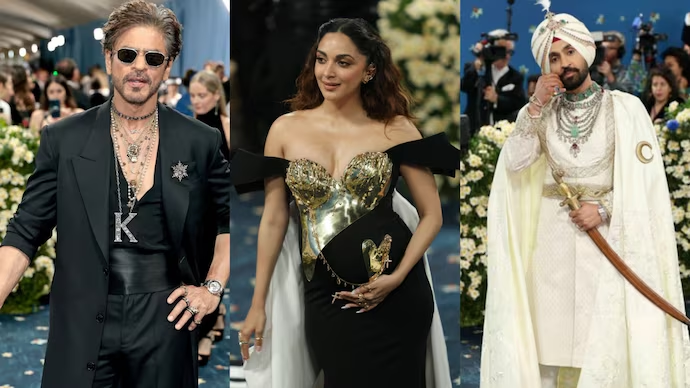
The Met Gala 2025 was not just another fashion event—it became a cultural turning point. This year, the prestigious fundraiser for the Metropolitan Museum of Art’s Costume Institute took a bold and celebratory turn, as India took center stage in the most magnificent way. From the theme to the styling, from representation on the red carpet to the headlines that followed, Indian culture, craftsmanship, and creativity dominated the spotlight like never before.
The theme of the 2025 Met Gala, “Threads of Time: Celebrating Global Heritage”, gave designers and celebrities the freedom to dive deep into their cultural roots and reimagine traditional elements through the lens of high fashion. No country embraced this opportunity more passionately—or more stylishly—than India. With its centuries-old textile legacy, intricate embroidery traditions, diverse regional fashion, and rich mythology, India had everything it needed to capture global attention. And it did. In spectacular style.
As the red carpet rolled out in New York City, the world watched in awe as a wave of Indian designers and celebrities redefined what it meant to be fashionable and fearless. It wasn’t just about wearing Indian clothes; it was about representing Indian identity, innovation, and artistry with authenticity and modern flair. From Bollywood to Hollywood, Indian stars brought not just glamour but deep cultural meaning to their ensembles, making powerful statements about heritage, identity, and inclusion.
Deepika Padukone: The Regal Revival
Among the first to arrive and instantly set social media ablaze was Deepika Padukone, a Met Gala veteran known for her past show-stopping looks. But this year, she reached new heights. Wearing a custom Sabyasachi lehenga gown that fused Mughal miniature art with futuristic metallic threadwork, Deepika embodied the spirit of ancient royalty meeting modern mysticism. Her outfit, reportedly inspired by the celestial queens in Indian epics, was adorned with motifs of lotuses, elephants, and cosmic constellations. She paired the ensemble with a maang tikka encrusted with diamonds and pearls, subtly hinting at the sacred feminine energy of Indian mythology.
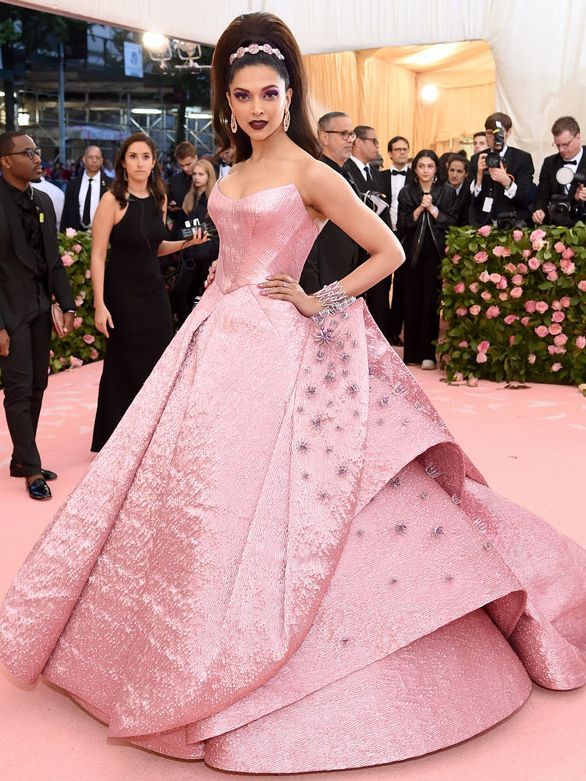
But what truly turned heads was the powerful narrative behind the look. In an interview, Deepika said, “I wanted to showcase not just the beauty of Indian craftsmanship but the stories behind them—the idea that our heritage is timeless and always evolving.” With every step, she embodied that ethos.
Alia Bhatt: The Modern Goddess
Alia Bhatt was another name on everyone’s lips, thanks to her stunning gold-draped saree gown designed by Manish Malhotra. The saree, reinterpreted as a flowing gown with sculpted shoulder drapes and thigh-high slit, combined the elegance of Kanjeevaram silk with the edginess of international haute couture. Embellished with zardozi, mirror work, and Swarovski crystals, her look was ethereal yet powerful—an homage to Indian goddesses reimagined for the 21st century.
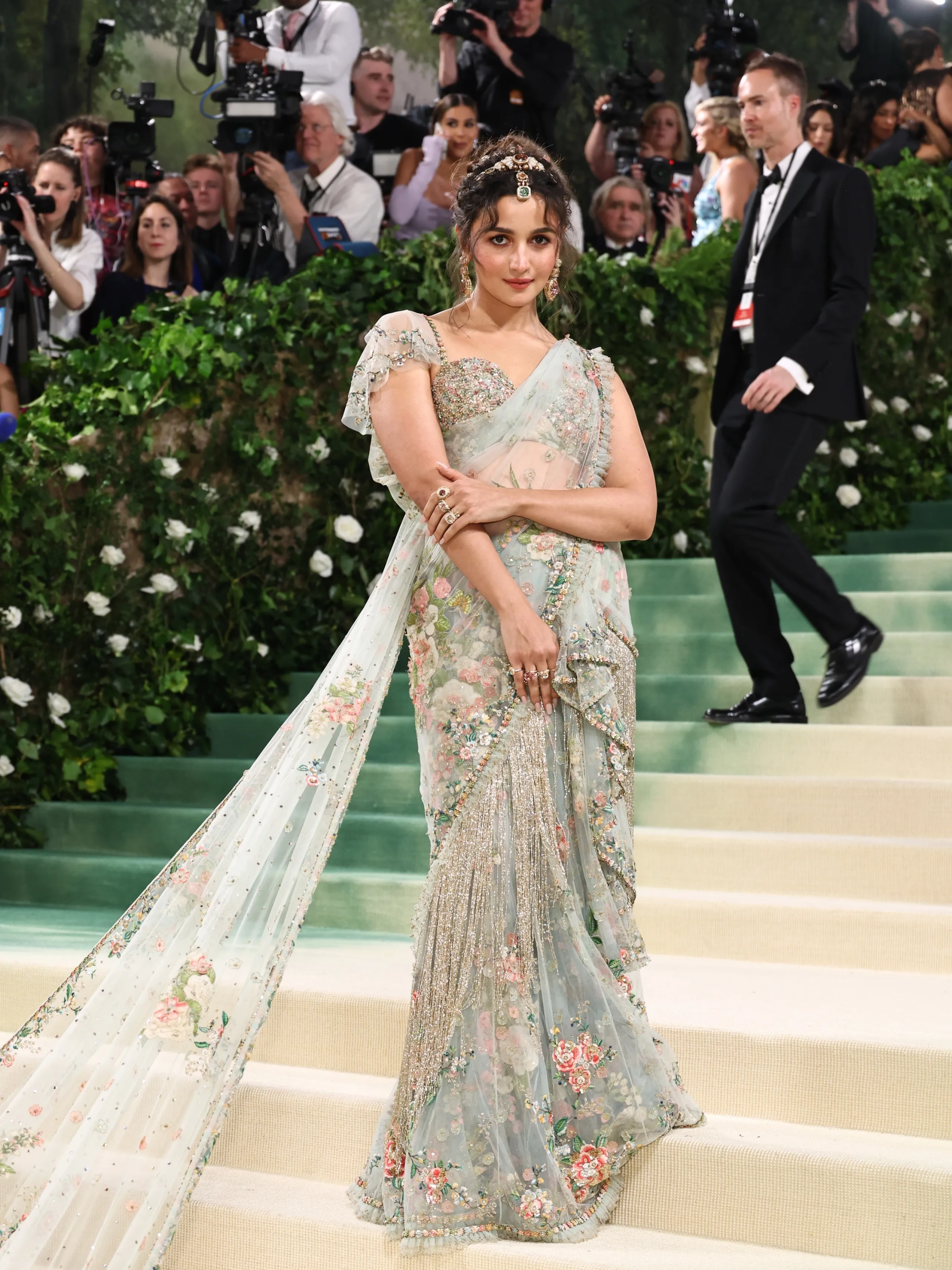 Alia complemented the look with minimal accessories but maximal intent. Her hair was slicked back in a braided crown, echoing the styles of ancient temple dancers. Her makeup was subtle but radiant, accentuating her natural glow. In a quick red carpet chat, she mentioned, “Tonight, I feel like Lakshmi walking through Manhattan,” and the world agreed.
Priyanka Chopra Jonas: A Queen of Reinvention and Regal Relevance
When Priyanka Chopra Jonas graced the Met Gala 2025 red carpet, it was a moment of majestic return. A global icon who’s consistently used fashion as a tool of expression and empowerment, Priyanka once again proved why she remains a force to be reckoned with—both in Hollywood and on international fashion’s most coveted carpet. This year, she collaborated with the legendary Indian designer Rahul Mishra, known for his slow fashion ethos and intricate storytelling through textiles. Her ensemble was a fantastical fusion of couture and craft, featuring a gown made of layered organza and silk threads that depicted scenes from Indian mythology, flora, and folklore—all hand-embroidered over 3,000 hours.
The silhouette was both ethereal and powerful, featuring a structured bodice that transitioned into a flowing trail, symbolizing the sacred rivers of India. The color palette—burnished gold, ivory, and hues of peacock blue—paid homage to India’s spiritual and natural beauty. But the true showstopper was her custom shoulder cape, embroidered with a cosmic tree of life, representing rebirth, strength, and connection across cultures. Adorned in heirloom jewelry—temple-style earrings, stacked bangles, and a statement maang tikka—Priyanka blended East and West effortlessly.
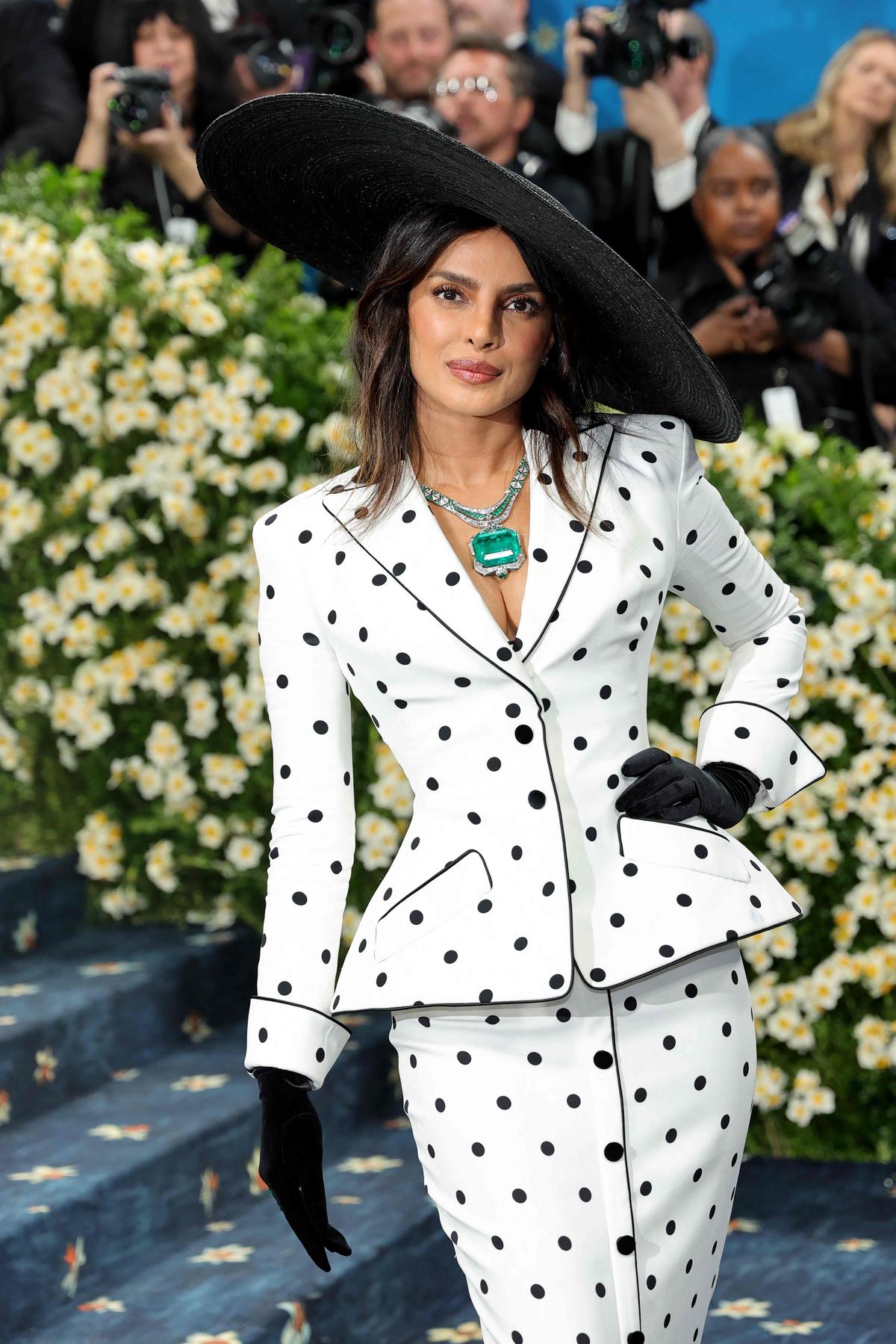 Her look was styled by her long-time fashion collaborator Law Roach, and the synergy between global glamour and Indian artistry was nothing short of magical. Priyanka walked the carpet with elegance and pride, pausing to explain that her outfit was a tribute to “the Indian artisans whose hands carry centuries of tradition and whose stories deserve the global spotlight.” For many, her appearance wasn’t just a fashion moment—it was a reminder that Indian heritage, when presented with authenticity and reverence, can move the world.
Sonam Kapoor Ahuja: The Fashion Oracle
No conversation about red carpet royalty is complete without Sonam Kapoor Ahuja. Known globally for her impeccable taste and trendsetting style, Sonam arrived in an Anamika Khanna ivory ensemble that reimagined the Nehru jacket as a dramatic floor-length robe over a hand-embroidered anarkali. Inspired by Mughal architecture and the soft curves of lotus ponds, her outfit was a masterclass in restraint and regality.
She walked the carpet with a powerful message: “Fashion is memory, legacy, and a tool of change.” Her entire look was designed sustainably, using plant-based dyes and organic silk—a nod to India’s ancient commitment to ecological harmony.
New Faces, Global Impact
Beyond the usual A-listers, 2025 saw a surge of Indian-origin models, artists, and creators making their Met Gala debut. South Indian actor Samantha Ruth Prabhu wore a Tarun Tahiliani concept saree that blended traditional bandhani with digital prints. Rising star Maitreyi Ramakrishnan, best known for her role in “Never Have I Ever,” turned heads in a lavender lehenga-inspired gown by Falguni Shane Peacock. And designer Supriya Lele, based in London, dressed several attendees in minimalist Indo-British silhouettes that fused raw silk with modern tailoring.
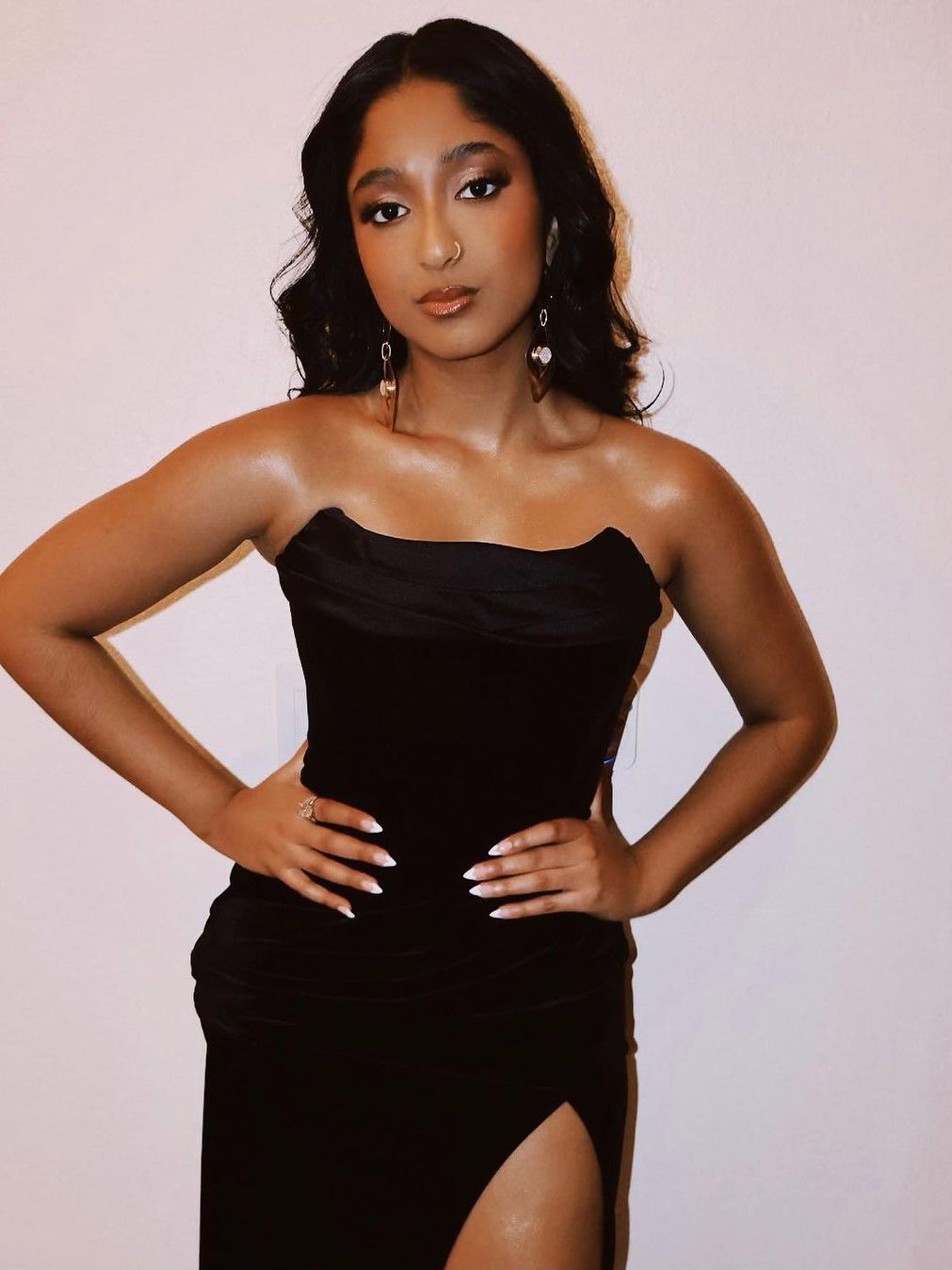 These new voices brought fresh interpretations of Indian identity, proving that Indian fashion is not monolithic—it is diverse, diasporic, and dynamic. From traditional weaves to conceptual cuts, the narrative was inclusive and forward-looking.
Shah Rukh Khan: The King of Hearts Reclaims the Global Stage
The biggest surprise—and arguably the most defining moment—of the Met Gala 2025 came with the arrival of Shah Rukh Khan, making his Met debut in a way that stunned fans and fashion critics alike. As soon as he stepped onto the red carpet, the crowd erupted in excitement. Cameras flashed wildly, and social media instantly ignited. It wasn’t just because of his global superstardom—it was the sheer elegance and symbolism of his look.
SRK wore a custom Raghavendra Rathore ensemble, which paid homage to India’s royal past while pushing the boundaries of contemporary menswear. He donned a jet-black bandh gala sherwani, intricately hand-embroidered with silver thread inspired by Mughal architecture and the night sky. The silhouette was sharp, clean, and dignified, but it carried a subtle flair with a sweeping cape that bore verses in Urdu calligraphy—poetry from the works of Mirza Ghalib and Faiz Ahmed Faiz woven into the lining.
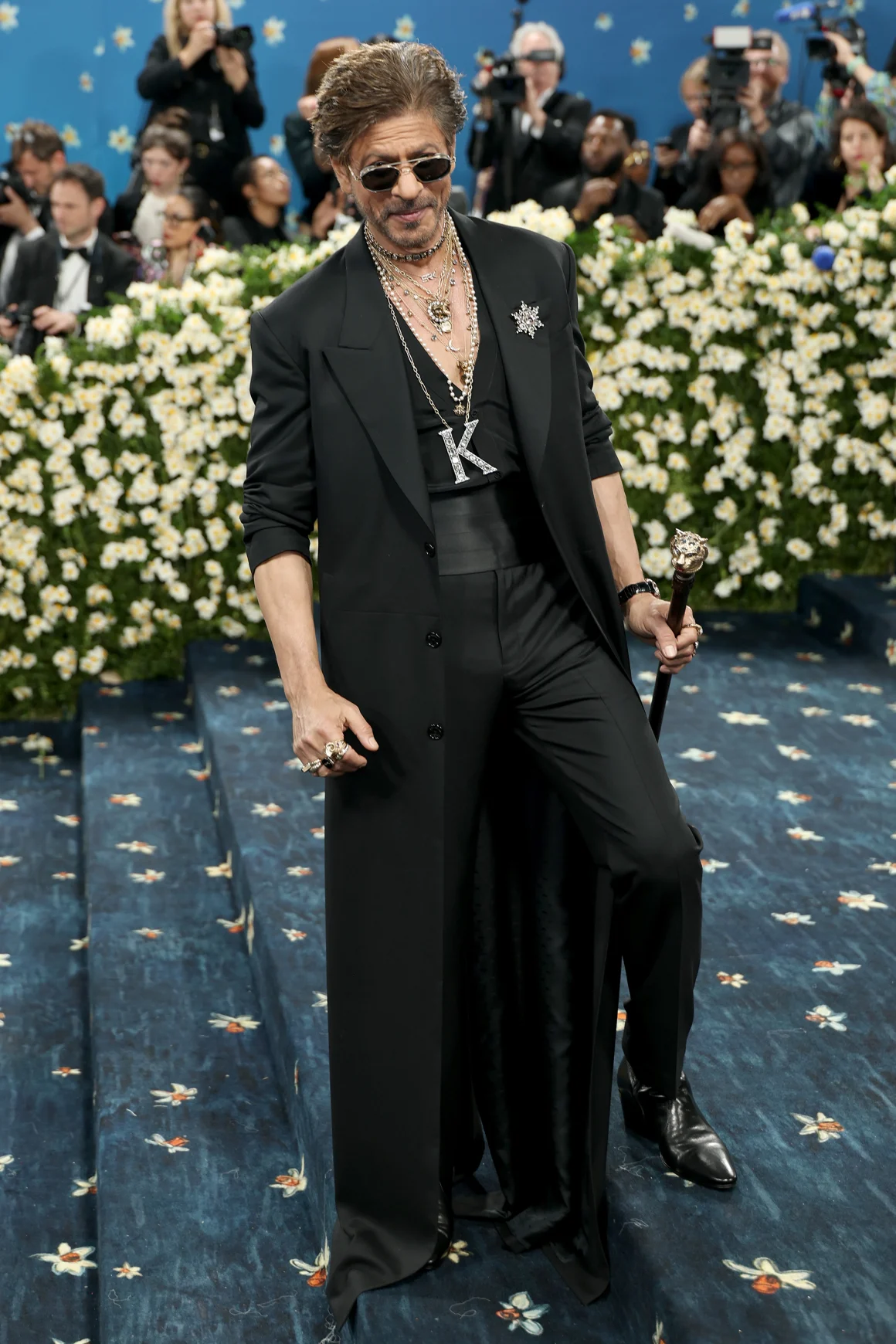 His look was completed with black embroidered juttis and a handcrafted brooch made of jade, onyx, and mother-of-pearl—symbolizing knowledge, power, and peace. Shah Rukh, ever the charmer, smiled his signature smile and greeted the press with folded hands, proudly saying, “Tonight, I walk not just for fashion, but for the millions of storytellers that India has produced.”
His presence transcended style. It reminded the world of India’s powerful cinematic and cultural influence, with Shah Rukh representing not just a celebrity but an emblem of Indian excellence on the world stage. Publications like Vogue, GQ, and The New York Times called his appearance “the most poetic fashion statement of the evening,” and many dubbed it the return of a king—not just in Bollywood, but now in the world of international couture.
Indian Designers Rule the Night
This year, Indian designers weren’t just dressing Indian celebrities—they were making a global statement. Gaurav Gupta, Sabyasachi, Manish Malhotra, Rahul Mishra, Anamika Khanna, and others had their creations featured not just once but repeatedly on some of the world’s biggest names. Zendaya, one of the co-chairs of the event, wore a stunning blouse-skirt set inspired by Rajput armor, created in collaboration with Abu Jani Sandeep Khosla. Her look was one of the most talked-about of the night.
Fashion critics from Vogue to Harper’s Bazaar couldn’t stop praising the intricacy, storytelling, and craftsmanship that Indian designers brought to the table. What was once niche had now become mainstream. The fashion world was finally ready to not just borrow from India but to give it the spotlight it rightfully deserved.
Cultural Reset: Why 2025 Was a Turning Point
The impact of India’s dominance at the Met Gala 2025 goes beyond a single night. It signaled a global cultural shift—an acknowledgment that Indian fashion is not “ethnic wear” but high fashion. It made space for traditional artisans to share global stages. It brought nuanced Indian stories to international audiences. And it inspired a generation of young South Asians to embrace their identity with pride and creativity.
Social media was flooded with hashtags like #IndiaAtTheMet, #DesiMagic, and #ThreadsOfTime. Designers from Paris to Tokyo began referencing Indian elements more respectfully. Museums started planning textile exhibitions focusing on South Asia. Bollywood and Hollywood collaborations surged. And young Indian creators on platforms like Instagram and TikTok found themselves at the center of a growing fashion renaissance.
Conclusion: A Night the World Will Never Forget
When the curtain closed on the Met Gala 2025, one thing was clear: India had arrived—and how. More than a fashion moment, this was a cultural coronation. It was a celebration of color, texture, heritage, and imagination. From handloom to haute couture, from mythology to modernity, Indian fashion commanded respect, awe, and attention.
This wasn’t appropriation—it was appreciation. And it was long overdue.
As the flashbulbs faded and the world scrolled through millions of photos from the night, one truth sparkled brighter than any diamond: India didn’t just walk the red carpet—it ruled it.